The Moesgaard Archaeo-Science Laboratory consists of two rooms (4215-112 and 4215-039) within the Department of Archaeology and Heritage Studies at the ‘Moesgaard Campus’ of Aarhus University. The establishment of the laboratory was supported by the School of Culture and Society through funding from the Aarhus Universitets Forskningsfond.
The set up was designed to enable sample processing and sorting of materials from departmental excavations, as well as for archaeobotanical and zooarchaeological analyses, and to conduct work for the study of human remains from archaeological sites. The equipment currently available allows students and staff at our Department to:
- study archaeological materials microscopically,
- undertake high-resolution sampling by micromilling and
- prepare samples for biomolecular analyses and for other archaeometric analyses.
We also undertake collaborative research with colleagues from other institutions and have hosted students from abroad, as well as PhD researchers, to work on archaeological science projects. Both internal and external colleagues, as well as students, should contact Prof. Marcello A. Mannino (marcello.mannino@cas.au.dk) for further information on possible internships, research stays and collaboration proposals.

FACILITIES AND EQUIPMENT
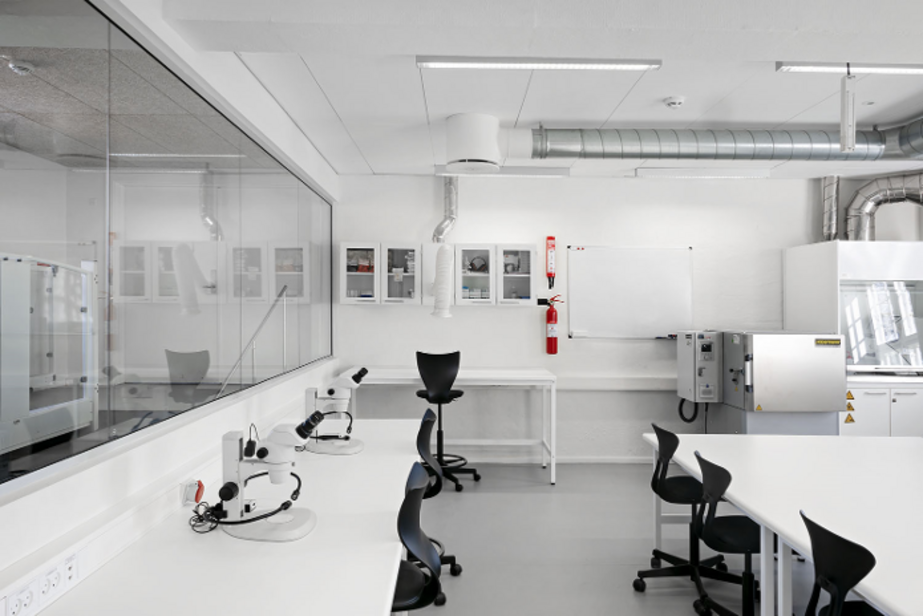
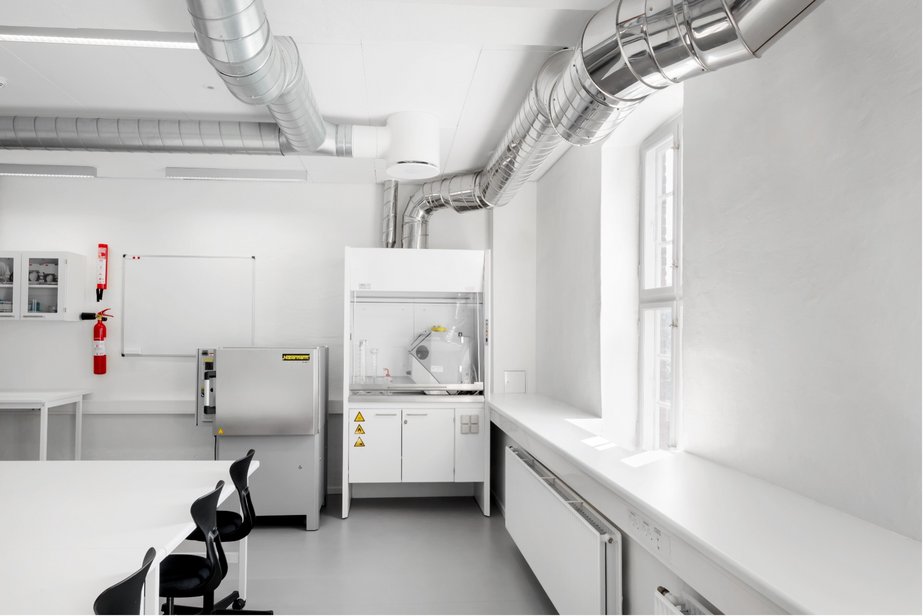
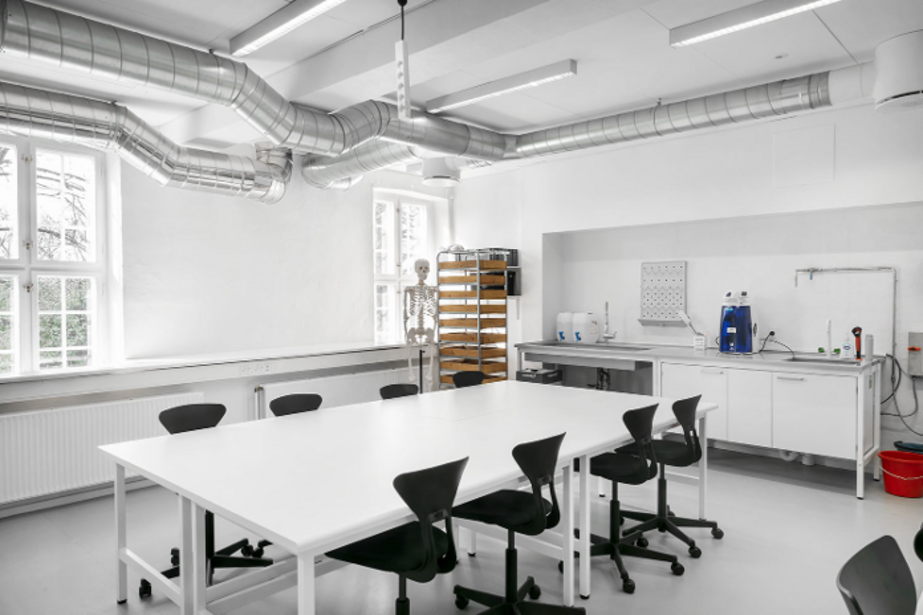
Laboratory for micro-excavation, sample processing and sorting [4215-112]
The larger of the two rooms is devoted to excavation-related processing and sorting work, including photography and microscopy, as well as sampling of archaeological finds at different resolutions and initial sample pretreatment for different scientific analyses. This laboratory is where chemicals are stored under the fume hood and solutions can be prepared using deionized and ultrapure water produced in house.
The space can be adapted to the work at hand and has, for instance, been used to conduct the micro-excavation of a sediment block extracted from the shell-matrix deposits at the Neolithic site of Ginnerup.
TEACHING: laboratory classes; sample sorting for excavation courses; hands-on work for Bachelor projects, internships and Master theses
RESEARCH: micro-excavation, sample sorting, microscopy, photography, storage, sampling, sectioning, preparing solutions, cleaning and sterilysing glassware
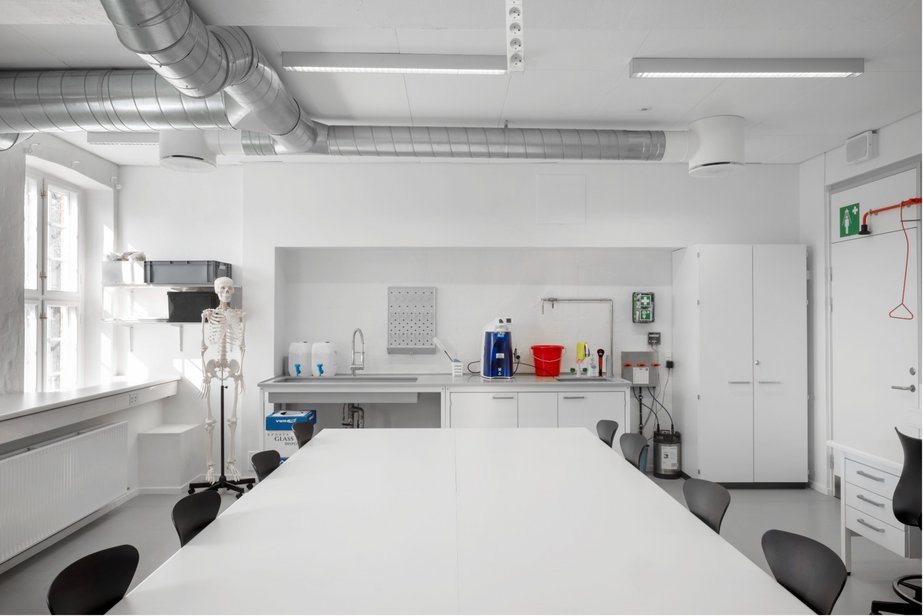
| Facilities & Equipment | Model | Use |
|---|---|---|
| Sink and water trap | Labflex | washing laboratory ware, wet sieving sediment samples |
| Water demineralization unit | Silex-11 | producing deionized water |
| Water purification system | Millipore Direct-Q 3 UV | producing ultra-pure water |
| Sample storage cupboard | Labflex | storage of core part of the organic teaching collections and of samples for analysis |
| Desks for sample sorting | Labflex | these can be joined (or not) depending on specific sorting needs |
| Suction device for drilling | Labflex | aspirating microscopic powder-like particles generated by drilling |
| Worktop with cabinets | Labflex | drilling samples and focussed sample sorting |
| Manual drill | Marathon SDE-SH37LN | cutting and extract powders from specimens for different pretreatments |
| Fume hood | Labflex 215 | protecting laboratory users from inhaling hazardous gases, toxic substances and dust |
| Cabinet for chemicals | Labflex | safe storage of chemicals (acids and bases) |
| Ultrasonic cleaning bath | VWR USC 200T | cleaning ultrasonically samples and laboratory equipment |
| Sandblaster | BEGO 25825 | mechanical air cleaning of the surfaces of specimens and samples |
| Forced convection chamber furnace | Nabertherm NA 30/45 | drying, sterilizing laboratory glassware and combusting materials up to 450 °C |
| Desks for microscopes and drawers | Labflex | conducting microscopy work on archaeological samples and assemblages |
| Zoom stereomicroscope [3 items] | Nikon SMZ745 | sample sorting and micromilling; magnification range 3.35x to 300x |
| Zoom stereomicroscope | Nikon SMZ800N | sample sorting and photographing; magnification range 5x to 480x |
| Microdrill | Minimo slender head low speed drill H023 | microsampling (milling) at high-resolution powder samples from shell, teeth and other organic materials for isotopic and other chemical analyses |
Laboratory for sample pretreatment and cold storage [4215-039]
The smaller of the two laboratory rooms was designed to execute different pretreatments (e.g. collagen extraction, preparation of carbonates for isotope analyses). This space is where organic samples are kept for short- and long-term cold storage and numerous pieces of equipment housed to conduct controlled heating, centrifuging and high-precision weighing.
TEACHING: laboratory classes; hands-on work for Bachelor projects, internships and Master theses
RESEARCH: short- and long-term storage of organic research specimens; sample pretreatment for radiocarbon dating and isotope analyses
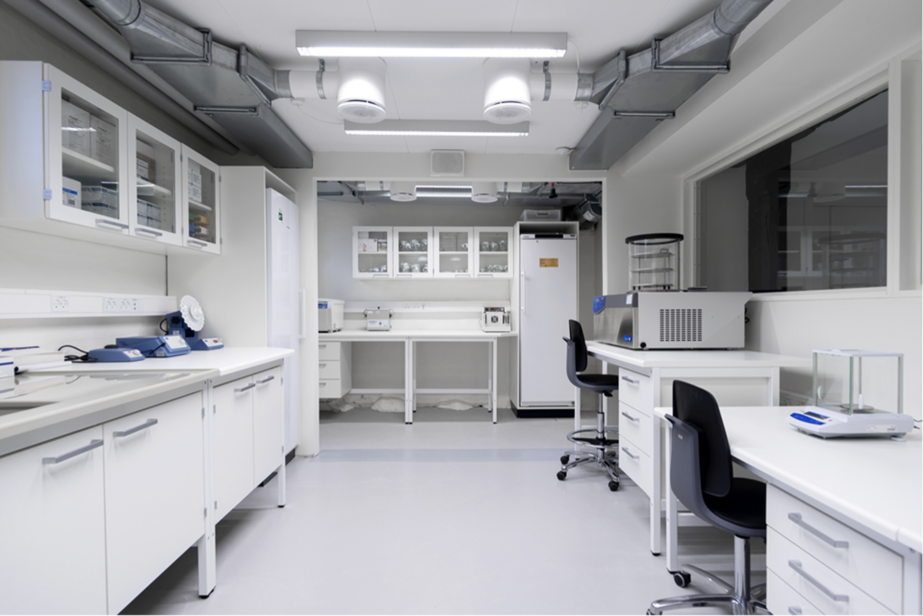
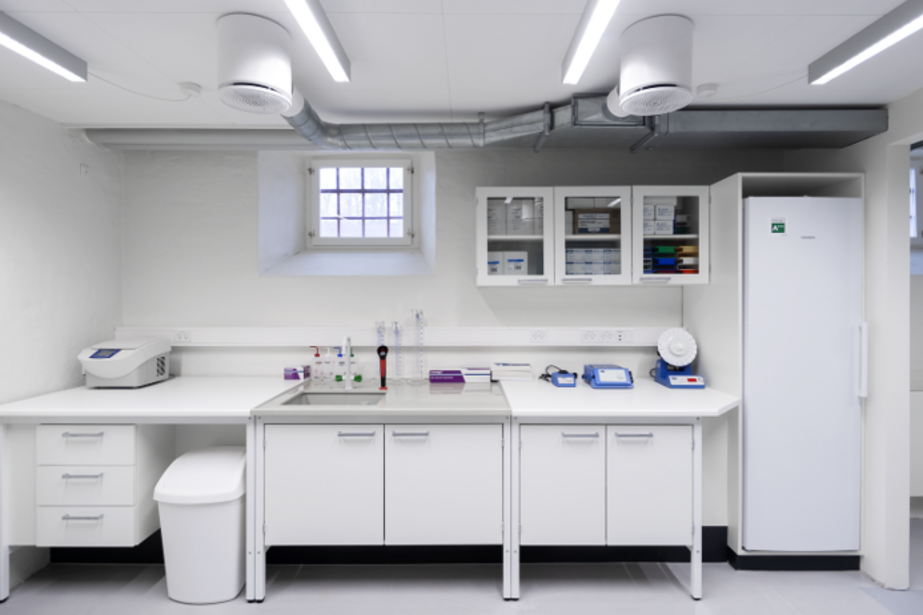
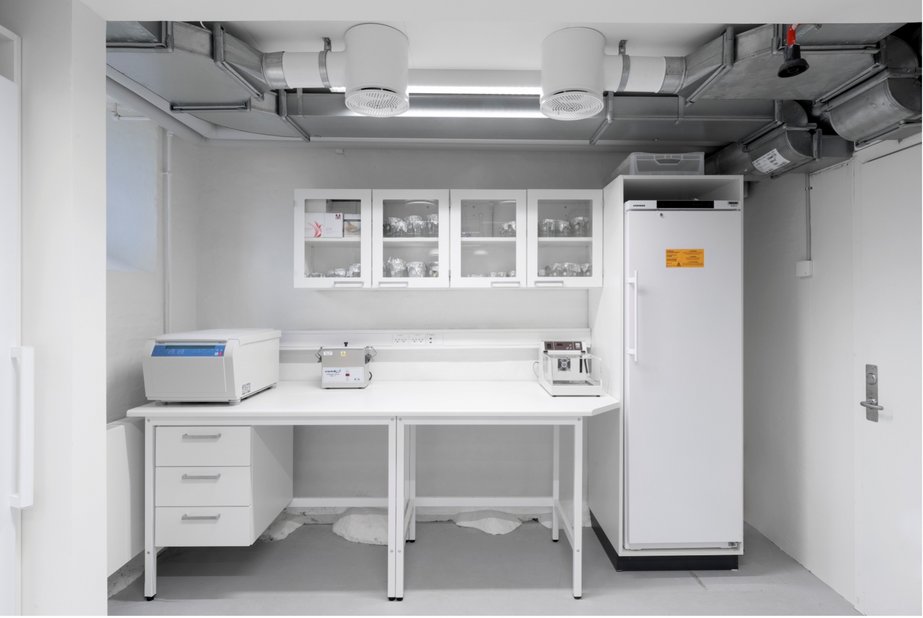
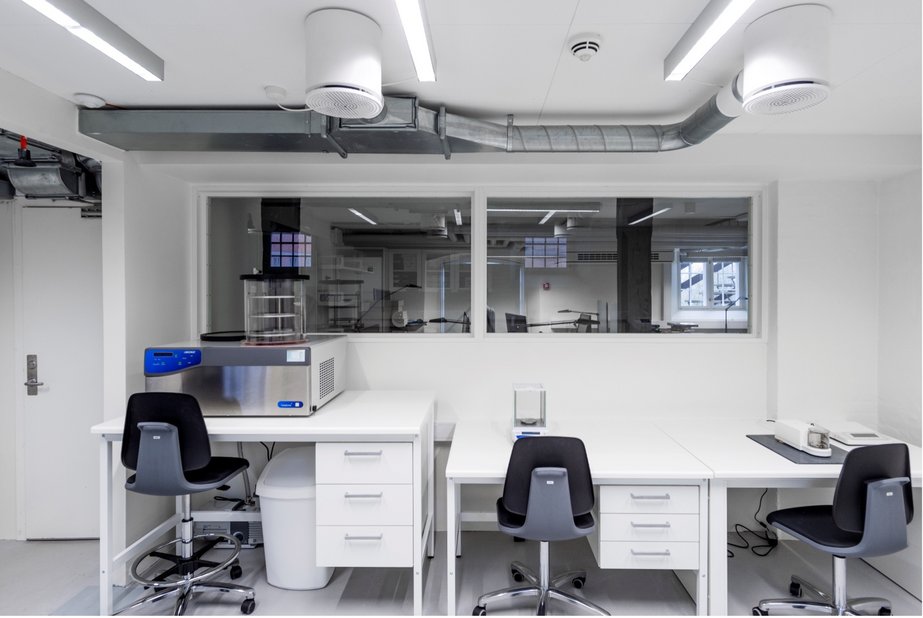
| Facilities & Equipment | Model | Use |
|---|---|---|
| Fridge | Siemens iQ300 | short-term storage of samples |
| Ultrasonic cleaning bath | VWR USC 300T | ultrasonic cleaning of samples and laboratory equipment |
| Block heater | Stuart SBH130 | heating samples (in test tubes) at specific temperatures |
| Centrifuge | Heraeus Labofuge A | isolating and separating suspensions immiscible liquids (in small test tubes) |
| Ultracentrifuge | Thermo Scientific Heraeus Megafuge 16 | isolating and separating suspensions immiscible liquids (in large test tubes) |
| Microcentrifuge | Sigma 1-16 | isolating and separating suspensions immiscible liquids (in Eppendorf tubes) |
| Vortex mixer | Stuart SA8 | mixing and resuspending liquids in test tubes |
| Tube rotator | Stuart SB3 | mixing, blending or agitating substances in tubes or flasks for different pretreatments |
| Mini Incubator | GFL 4010 | drying samples (e.g. carbonates) |
| Analytical balance | Fisher Scientific PAS214C | weighing samples and extracts generated by different pretreatments |
| Microbalance | Sartorius MSX | weighing samples to be dispatched for isotopic or other analyses |
| Freezer | Labconco Freezone 6 | lyophilizing samples to dehydrate and access frozen specimens |