Possibilities in Life with Dementia
How do we support a dynamic and meaningful everyday life for people living with dementia? This question was central when researchers, practitioners, people with dementia and family members gathered at AIAS at Aarhus University for the conference Possibilities for Care in Life with Dementia.
How do we support a dynamic and meaningful everyday life for people living with dementia? This question was central when researchers, practitioners, people with dementia and family members gathered at AIAS at Aarhus University for the conference Possibilities for Care in Life with Dementia.
When we talk about dementia, the conversation often turns to what is becoming more difficult or disappearing. At the conference, the focus was also on what remains possible: the possibilities, relationships and meaningful moments that can still emerge in everyday life with dementia. The conference was opened by the Dean of Arts at Aarhus University, Maja Horst. In her opening, she highlighted a dementia choir as an example of how people with dementia can continue to participate in and contribute to communities. When people sing together, roles and differences can take a back seat, and people come together around something they share.
That perspective – that people with dementia are more than their diagnosis – was a recurring theme throughout the day.
(copy 3)
Perspectives on possibilities
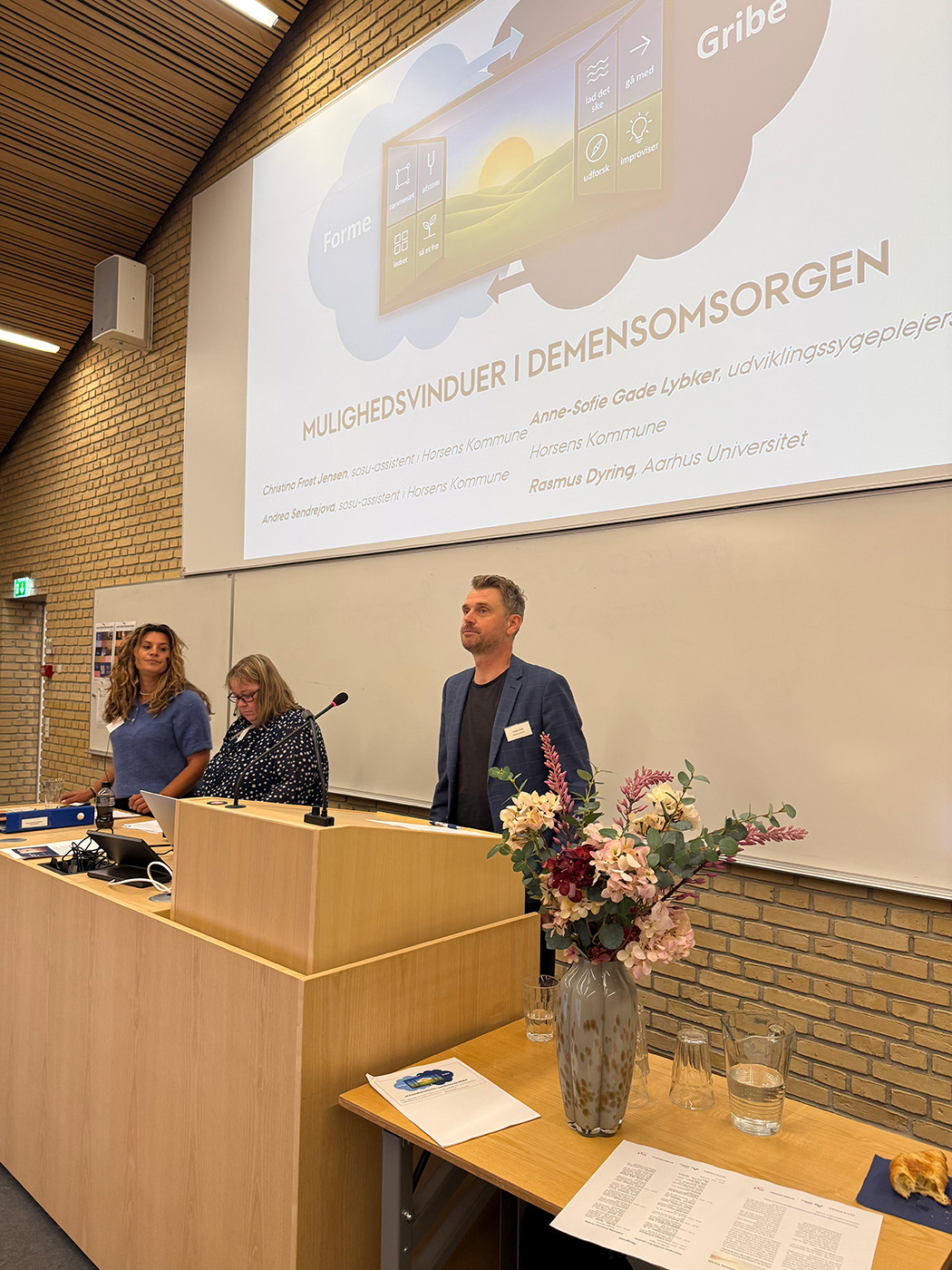
This was followed by a series of presentations and conversations on dementia care, family life, creativity, ethics and self-determination, among other things.
Care professionals shared what focusing on possibilities can mean in everyday care:
“The best thing about the window of opportunity is that we can see that it is good for our residents, and we also get job satisfaction out of it,” said one of the care professionals who shared his experiences from the project.
Family life with dementia was also highlighted:
“We’re finding a new way of being ‘us’ – it’s not the same as before, but there’s still a sense of ‘us’.”
These two perspectives reflect a central idea in the research project Windows of Possibilities: everyday life with dementia is not only shaped by routines and established frameworks. It can also make room for the unexpected, for improvisation and for new ways of being together.
(copy 5)
When there is room for the unexpected
Good dementia care is therefore not only about compensating for what becomes more difficult. It is also about being able to spot the possibilities that arise in specific situations.
It can be an activity that suddenly takes a different direction, an initiative from a person with dementia that a care professional chooses to follow, or a family that finds new ways to be together.
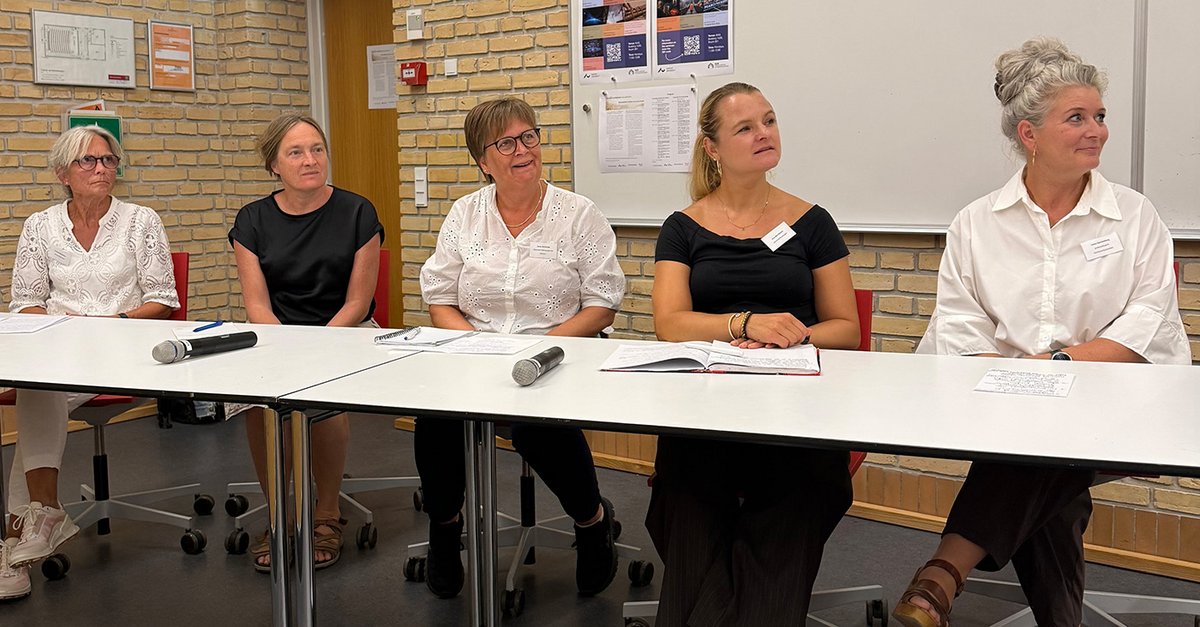
Researchers and practitioners have investigated precisely such situations together in the Windows of Opportunities. Among other things, the project has worked with the concepts of the window of opportunity and positive situational work as ways of spotting and acting in situations where something new and meaningful can arise. The first day of the conference ended with a panel discussion where different perspectives from the day were brought together. Here, the focus was also on the framework that surrounds care: What does it require of employees, relatives, managers and organisations if there is to be room to seize the possibilities that arise in everyday life?