Together, the countries of South Asia (India, Pakistan, Bangladesh, Nepal, Bhutan, Sri Lanka, and the Maldives) make up almost a quarter of the world's population, while India has become the most populous country and one of the largest democracies in the world. South Asia is also an emerging geopolitical hotspot: India is one of the world’s largest economies, a key player in the green transition, and a critical manufacturing hub and strategic ally in a multipolar world that is pivoting away from China. Asia also presents security concerns as a result of the constant simmering tensions between the two nuclear powers of India and Pakistan, while borders with China remain disputed. Besides this, it is home to one of the world's oldest civilizations, Bollywood (the world's largest film industry), and is closely connected to a large global diaspora.
Faculties within the knowledge area of India and South Asia Studies at the Department of Global Studies research this region and its links to other countries and regions across the globe. From Nobel to Tagore, to two International Booker prizes for Indian writers, there has recently been a global audience attracted to Indian writings. Research projects in our programme cover themes of plastics, toxicity, gender, and health as they cut across South Asia, Southeast Asia, and Southern Africa; analyses of community-led infrastructures in India and the Indian Ocean world; and foci on the broad fields of visual culture and political anthropology including democracy, nationalism and indigeneity, cinema, literature and usage of language in social political spaces.
The BA and MA offerings at the Department of Global Studies reflect this knowledge and area expertise and contextualize it at the scale of the global and the planetary.
Academic Background:
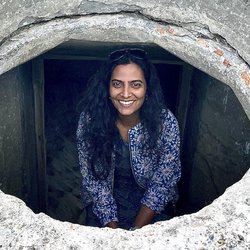
Prior to joining the Department of Global Studies at Aarhus University, I completed my master’s in development studies at IIT, Hyderabad in August 2021. This was a way of fulfilling my desire to engage, learn and grow, especially after having worked on diverse projects in education sector in India. My earlier bachelors and masters have been in English Literature at Mumbai University.
My research in a nutshell:
Specifically within the scope of my PhD I am hoping to research how people from developing countries, like India perceive, use, and dispose plastics. I am interested in exploring the socio-material and socio-cultural aspects of plastics, while also being mindful of its interlinkages, commonly with modernity, industrialization and more recently with climate change and the Anthropocene. Other academic interests include urban studies, discard studies, anthropology of infrastructures and ethnographies of design processes.
If you would not be a researcher, what do you think would be your profession today and why?
I would have most definitely turned to playwriting or scriptwriting. I love deconstructing plots and often find myself preempting narratives, be it a novel, play, series, or film.
Academic Background:
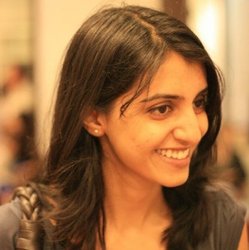
I have a PhD in sociocultural anthropology, with a minor in medical anthropology, from the School of Anthropology at the University of Arizona, USA. I came to the PhD by way of a MA in South Asia Studies at the National University of Singapore, and prior to that, I had received a Bachelor of Business Administration degree, also from the National University of Singapore. Along the way, I worked in advertising and in educational/academic publishing.
My research in a nutshell:
I am a sociocultural and medical anthropologist who conducts fieldwork in South and South East Asia (with a focus on urban India), and my research interests are centered on interactions between the body and its environment, globalizing processes, and consumption practices. My current research revolves around how the environmental and health costs of rampant plastic use and disposal are experienced and comprehended differently in different local contexts. The project has been supported by a Homi Bhabha Fellowship and a Carlsberg Semper Ardens: Accelerate Fellowship. Previous research interests have included lived experiences of polycystic ovary syndrome, a hormonal disorder and the leading cause of female infertility worldwide, and explorations of how post-liberalization marketing discourses and consumption practices affect understandings of the body in India.
What is your favorite book?
It is hard to settle on one, but it might just be Lucky Jim, by Kingsley Amis. No matter how many times I read it, it never stops being funny, and it is, after all, a campus novel. A very close second: Amitav Ghosh's In an Antique Land, for being an anthropological novel following a historical connection between the region I specialize in (India) and another part of the globe (Egypt).
Academic Background:
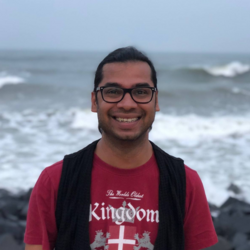
I have my B.A. from DDU Gorakhpur University in Hindi Literature, English Literature and Sociology. Later I moved to Jawaharlal Nehru University, New Delhi for my Masters in Hindi and completed MPhil and PhD from there as well. for M.Phil. in Hindi translation I wrote my dissertation on Analysis of the Hindi Translation of Salman Rushdie’s Novel “Midnight’s Children” in a Post-Colonial Perspective". I wrote my thesis for PhD in Hindi Translation on An Analytical Study of English Translations of “Bijak” with Special Reference to the Translations by Linda Hess-Shukdev Singh and Premprakash . I taught Hindi as a second language on all levels at JNU new Delhi at center of Indian Languages and Global Studies Program which was a joint-venture between J.N.U., Natal University Durban, South Africa, and Albert Ludwig University, Freiburg, Germany. Later I joined American Embassy as a Hindi Teacher in Post language program before coming to Aarhus. I also have been associated with Research Projects of MIT JPAL, Boston as a translator and Interpreter for many years.
My research in a nutshell:
My PhD was focused on Translation of Early modern Hindi Bhakti Poetry. In recent years I have been working on different aspects of Hindi
Language such as Changing Hindi in Web based content, Hindi of Indian Politics. Currently I am working on Hindi swear words: their linguistic roots and usages in various aspects of Indian society.
What is your favorite place in South Asia and why?
My favorite place is my alma mater JNU as its a global villages comprising students from all over the world. It gave a world view of many things when I came to university from a small town. The university have a culture of debate and discussions and as we used to say on campus you learn not only in the class but more outside the class where you debate and discuss on everything from Indian society to global politics over endless cups of warm chai!
Academic Background:
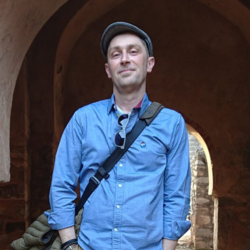
My studies combined anthropology as major with political science and history as minors - partly at Humboldt-Universität Berlin and Brunel University of West London, but primarily at Freie Universität Berlin, where I also obtained my PhD in 2003 as part of the Odisha Research Project (ORP) funded by the German Research Council/DFG.
My research in a nutshell:
My research focuses on two somewhat interrelated fields - namely political anthropology including state transformations, kingship and issues around democracy, nationalism and indigeneity on the one hand and visual culture especially photography on the other hand. While I have focussed on different parts of India, particularly Middle and Eastern India, lately my interest shifted towards the Indian Ocean and connections between India, Africa and the Arabian Peninsula and issues around infrastructures, migration, circulations and imaginaries which are the focus of the research project “Constructing the Ocean. Indian Ocean Infrastructures and Thick Transregionalism”.
If you would not be a researcher, what do you think would be your profession today and why?
If I would be forced to pick another profession, I am quite sure I would turn to photography, which has been a passion for quite a while and the camera has been a rather constant companion. Photography fascinates me because of its power to capture and freeze moments, otherwise lost, but at the same, in the best case, may add to a scene and reveal more than what is visible at first sight - and perhaps can tell a good story. For me, photography is not only about clicking pictures, but it is also about the social life of images, what we do with photographs that may entertain, bore or haunt us.