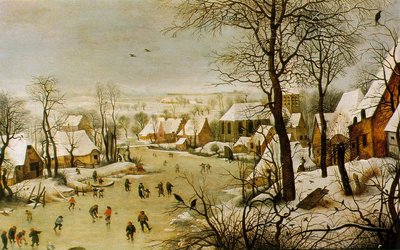
 Nowadays, the climatic change is an important topic of society and science. But this is not the first time that mankind faces deep climatic alterations which influenced everyday life, society and even history: Written records, pictorial sources and climatic reconstructions point out two very different periods of climate in Central and Northern Europe between the 8th and the 18th century.
The "Medieval Optimum" (800?1200 AD) with its almost Mediterranean climate enabled the settlements on Greenland, the first reported discovery of America and the spread of wine cultures over the continent.
The "Little Ice Age" (1450?1750) brought heavy floods, cold and wet summers, deeply changed the agrarian structure and might have caused the shift from the Baltic? Mediterranean to the Atlantic trade system.
This research seminar seeks to explore in how far these two explicit periods of extreme climate influenced the medieval and post?medieval house and its inhabitants. The papers will regard the construction of windows, walls and heating systems, but will also give an insight into specific solutions of ground plans and the change of functions in a house during the seasons of a year or under special climatic conditions between the Alps, the Massif Central and Scandinavia.
Wednesday, 5 December, 2012, 13?18 h
Moesgård, Building 4235, Auditorium 5
| 13:00 | Welcome (Mette Svart Kristiansen) | |||
| 13:15 | The Medieval Optimum and the Little Ice Age from a scientific point of view, evidence from different proxy records ABSTRACT: Climatic variations during the last approximately 1000 years are seen in numerous terrestrial and marine records around the northern hemisphere. Different proxies are utilized to reconstruct past temperatures, depending on the proxy and the local settings climatic anomalies like the Medieval Optimum and Little Ice Age are more or less pronounced.The talk will center around the proxies often used to reconstruct past climate change (among other pollen, foraminifera, stable isotopes) and examples of recorded climatic variations around Scandinavia, Iceland and Greenland and how the local records are linked to the larger atmospheric and oceanographic system of the northern hemisphere. | |||
| 13:45 | Historical Sources and the Importance of the Climatic Development in the Middle Ages ABSTRACT: The most recent estimates of medieval temperatures do not suggest that the so called Medieval Optimum had much impact on society and demography. Two or three years in succession that saw severe and geographically wide?ranging climatic anomalies were more important, causing famine, epidemics, and demographic loss. Such pan?European hunger catastrophes are recorded ten times between 1000 and 1350 retarding the general population growth in the High Middle Ages. | |||
| 14:15 | Coffee break | |||
| 14:30 | Regional traditions and climatic influences on heating systems in France ABSTRACT: The purpose here is to question the possibility of an influence of the Little Ice Age on the heating systems or the space organisation in the French context. From the tenth century, leaning stones chimneys in the main room were largely spread out in different geographic areas of the country, while Alsace was on the influence of stoves and stube. If there were cases of adoption of stoves, cultural habits seamed pulling up the change until the eighteenth century. | |||
| 15:00 | Wooden Boxes behind stone walls: Fire heated timbered rooms at medieval castles in Austria ABSTRACT: Up from the 13th century, a new architectural phenomenon appears in medieval castles in the Eastern Alps, but also in the surrounding regions: Timbered rooms with heating infrastructure. Whereas the first examples are combined with heating systems of the “hypocaustum type” (German: “Warmluftheizungen”), this heating technique disappears in favour of tile stoves. The textual sources allow identifying this type of room with the term “Stube”. Until the 15th century this type was built in half-timber or log construction, which may be interpreted as effective insulation technique. Up from the late 1400’s panelling prevails, which stands in contrast to the climatic changes in Early Modern times. | |||
| 15:30 | Coffee break | |||
| 15:45 | Indoor climate, energy solutions and spatialities at Skokloster castle during the Little Ice Age ABSTRACT: The paper discusses the climate history of Skokloster castle which is situated approximately 80 kilometers from Stockholm, Sweden. The castle’s well-preserved baroque interior and inventory protocols reflect contemporary approaches to indoor climate and comfort. Issues that I will look deeper into, concern how various architectural aspects such as spatial organization, heating and furnishing interacted in order to generate comfortable indoor environments during the Little Ice Age, a cooling period which was particularly perceptible c. 1550-1730. The main objective is visualize the importance of working with climate and architecture from a time period when building should not only be associated to style influences and power, but also to one of the most significant climate changes in historical times. | |||
| 16:15 | Sustainability in the Architectural Heritage of Denmark concerning city-and buildingscale ABSTRACT: The research project which is about to begin, is based on a hypothesis that the pre-industrial building heritage is characterized by a strong resource awareness in both urban and building level. The project will identify and contribute to the existing knowledge in this field in order to develop a better understanding of the principles and methods that have influenced the design and implementation of this building heritage. | |||
| 16:45 | Discussion (Rainer Atzbach) | |||
| 18:00 | Dinner | |||
Write to: rainer.atzbachANDhum.au.dk (spam protection, please substitute "AND" by common "@")
Rainer Atzbach, Assistant Professor or
Mette Svart Kristiansen, Associate Professor
both from Medieval and Renaissance Archaeology, Institute for Culture and Society, Aarhus University
Hosted by: Research Programme Material Culture and Heritage
